Distinguish Reflection from Fluorescence
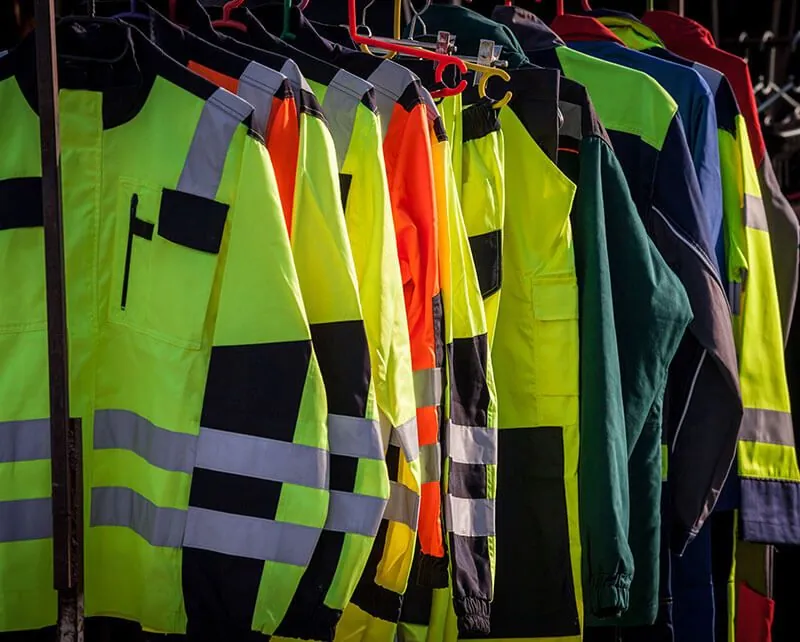
Retroreflective materials are designed to return incident light toward its source under defined conditions. Fluorescent materials have different optical behavior and are often used to improve conspicuity under suitable daylight conditions. A yellow, orange, green, or pink color does not by itself establish retroreflective performance. Ask TDF to confirm the material structure and which visibility-related characteristic is being offered for the proposed construction.
Specify the Intended Use Environment
Describe whether the material will be used in daylight, darkness with external illumination, wet conditions, or another environment. Include the placement on the finished article and the expected effects of folding, abrasion, washing, and wear. If the textile will be combined with coatings, printing, or other components, explain that construction. Performance should be assessed for the selected material and relevant conditions rather than inferred from a category name.
Check Standards and Finished-Product Requirements
If your purchasing brief names a visibility or protective-clothing standard, provide the exact edition, material requirements, and finished-product requirements. A fabric test result does not automatically certify a completed garment. Design, coverage, placement, assembly, and durability may need separate review. This category should not be presented as proof of compliance with any specific standard without documentation for the actual product and scope.
Prepare a Visibility-Material Inquiry
Send the intended application, substrate preference, dimensions or width, color, required optical performance, quantity, and cleaning conditions. Include the test procedure and acceptance criteria where these are mandatory. Ask TDF to confirm the available construction, evidence, sample evaluation, and commercial conditions. Clarifying the distinction between reflective and fluorescent requirements at the start helps avoid selecting a material that looks appropriate but does not meet the intended technical brief.